What are Magic Mushrooms?
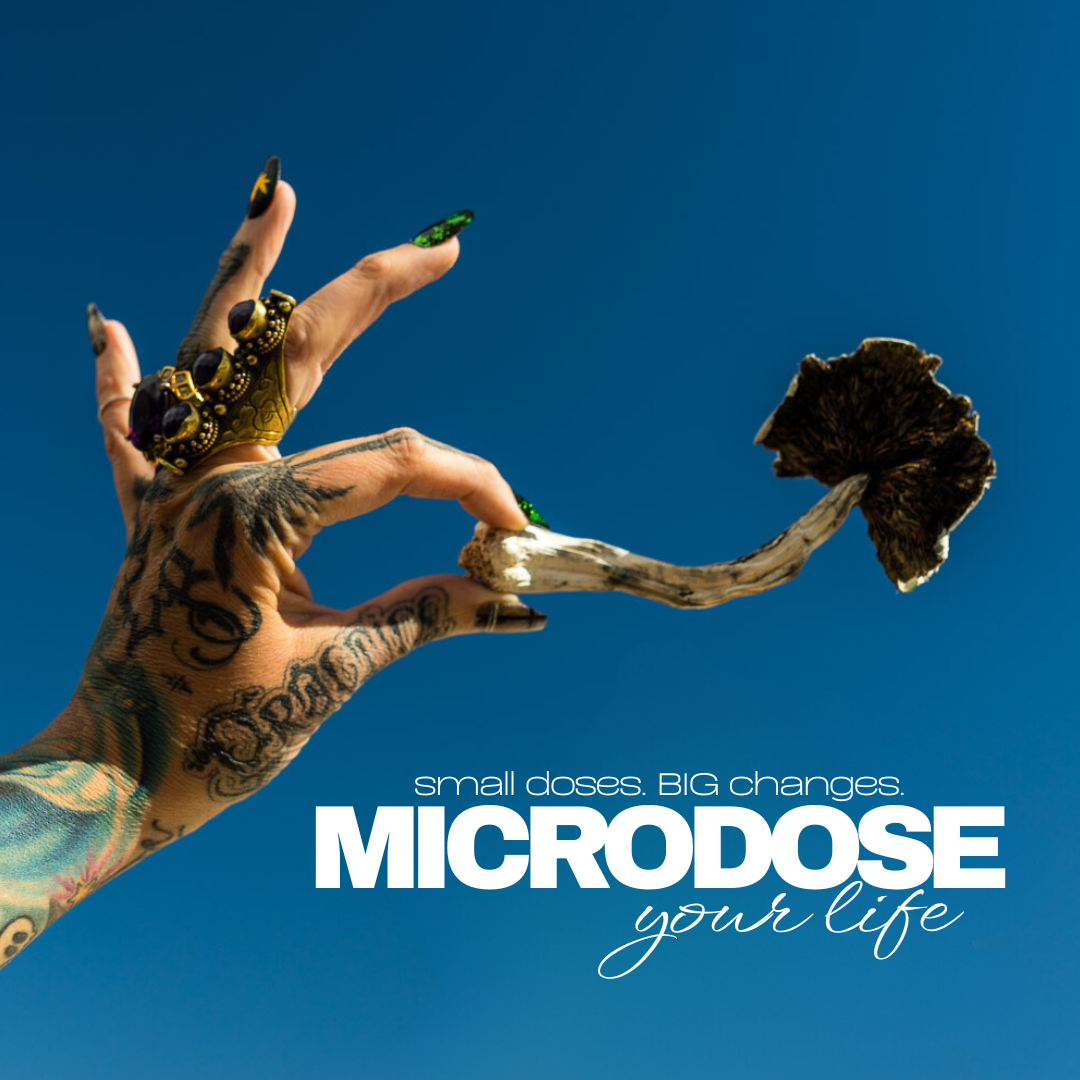
Okay, this is where it all started for me, and honestly, where it starts for most people. Mushrooms. The OG. Nature’s original mood booster. But before you picture tie-dye and someone giggling on a couch, let me tell you what’s actually going on, because the real story is so much more interesting than that.
A Little History
Psilocybin mushrooms have been used by humans for at least 10,000 years - we know this because of cave paintings. Indigenous cultures across Mexico, Central America, and beyond used them in sacred ceremonies for healing, clarity, and connecting with the divine. The Mazatec people of Mexico called them teonanacatl, flesh of the gods.
Then in 1957, a banker named R. Gordon Wasson published an article in Life magazine about participating in a Mazatec mushroom ceremony, and the Western world lost its mind. By 1970, psilocybin was classified as a Schedule I substance. Except they were wrong. Johns Hopkins, NYU, Imperial College London - some of the most respected research institutions in the world are now publishing studies showing that psilocybin is one of the most promising tools we have for treating depression, anxiety, PTSD, addiction, and end-of-life distress.
The Science
Psilocybin is the active compound in magic mushrooms. When you consume it, your body converts it into psilocin, which binds to serotonin receptors in your brain, particularly the 5-HT2A receptor. Psilocybin appears to temporarily quiet the default mode network, the part of your brain that runs the constant background chatter, self-criticism, and worry.
At a microdose level, 50 to 300 milligrams of dried mushroom, none of this is dramatic. What people most commonly report: improved mood and emotional stability, less anxiety (especially social anxiety), better focus and mental clarity, more patience with themselves and others, better sleep, and reduced PMS symptoms.
How Mushrooms Are Used for Microdosing
Mushroom microdosing is the most accessible entry point for most people, and it’s where the majority of my clients start. Capsules are the most common way to take microdoses - consistent, no guessing. Protocols are just a fancy term for scheduled dosing, but the best protocol is an intuitive one that works for you. Allow 1-2 days off a week for a tolerance reset.
Stacks pair your microdose with complementary, non-psychoactive mushrooms like Lion’s Mane for focus or Reishi for calm. My protocols and stacks are customized based on what you need: MOOD, SLEEP, CREATIVE.
Will I Trip Out?
ABSOLUTELY NOT. A microdose is sub-perceptual - not noticeable. No visuals, no loss of control, no bad trips, no trips at all. You are fully present and fully yourself, just maybe a little more at ease in your own skin.
Is It Safe?
Psilocybin mushrooms are non-addictive, non-toxic, and you cannot overdose on them. Johns Hopkins researchers have rated psilocybin as one of the safest substances studied - safer than alcohol, safer than tobacco. They’re not for everyone: if you have a personal or family history of psychosis or schizophrenia, we’d have a different conversation. But for most people the risk profile is remarkably low.
Ready to Learn More?
I’ve been doing this for over six years and talked to hundreds of people who were curious, nervous, skeptical, and hopeful. Book your consultation and we’ll talk about whether a mushroom microdose protocol might be the missing piece.